The Brainstem is the lower part of the brain which is continuous with the spinal cord. It is a common site for multiple sclerosis lesions. The brainstem can be broadly divided into the Midbrain, the Pons and the Medulla Oblongata. All the cranial nerves except the Olfactory Nerve and the Optic Nerve arise in the Brainstem.
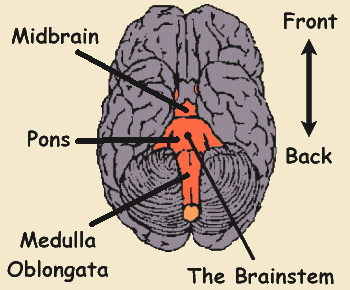
In general, the brainstem deals with communications between the rest of the brain and the body and the more primitive (but still essential) functions such as the vasomotor, respiratory and cardiac systems.
The symptoms of MS lesions of the brainstem include diplopia (double vision), vertigo (dizziness, loss of balance, nausea and vomiting), urinary problems (hesitancy or incontinence), hemiplegia, facial pain and paralysis and (more rarely) hearing problems. Many of these are associated with damage to cranial nerve transmissions.
Brainstem links:
Source details
Author: Paul Jones
Archive capture: . This is not a medical review date.